While planning a kitchen remodel, you first develop a rough idea of what you want and how much budget you have. After that, the next question you’ll likely ask is: how much will the entire kitchen remodel actually cost?
In this guide, we’ll break down kitchen remodeling costs in different ways, such as based on size, scope of work, and components of the kitchen. So you can see exactly where and how much your budget is going to be spent.
What is the Average Kitchen Remodel Cost in the U.S.?
The average kitchen remodel cost in the U.S. is around $26,940, with most projects typically falling between $15,000 and $60,000, depending on the size of the kitchen, the quality of materials, and the extent of the work involved.
In reality, your final cost can vary significantly from this average based on how much work is being done and the choices you make along the way.
How Much Does a Kitchen Remodel Cost Per Square Foot?
On average, kitchen remodels cost about $150 to $250 per square foot.
Smaller kitchens with basic finishes tend to stay on the lower end, while larger kitchens with premium materials and custom work move toward the higher end of the range.
Three Key Factors That Drive Kitchen Remodel Costs
Kitchen remodel costs don’t come from a single source, they are shaped by a combination of decisions and physical conditions in your kitchen. While many elements influence the final price, three core factors consistently have the biggest impact: kitchen size, scope of work, and material quality.
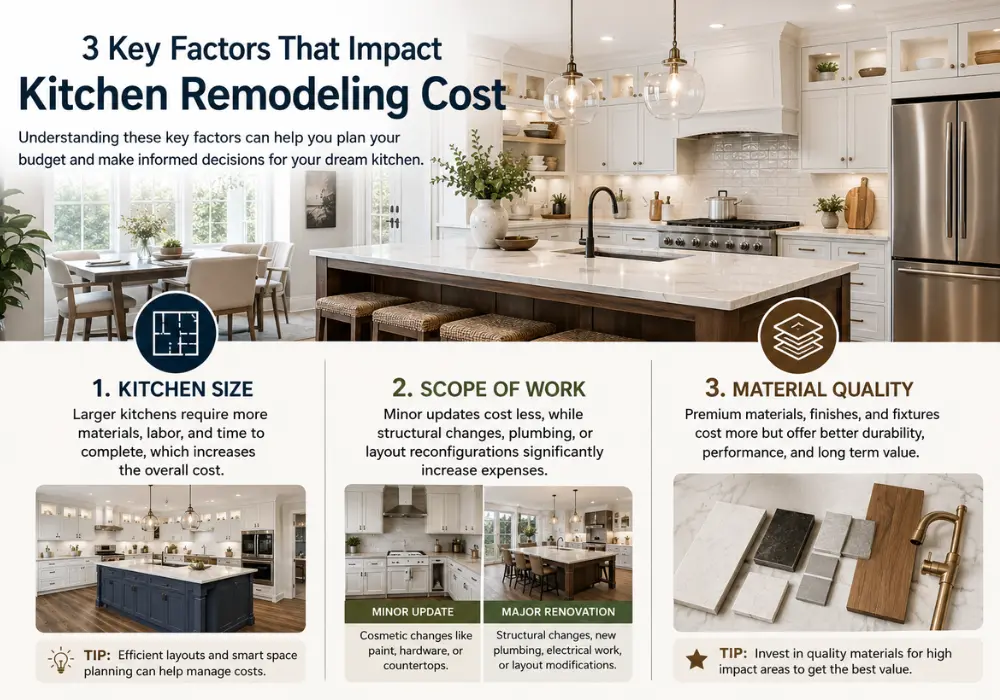
Understanding these three factors helps you quickly estimate where your budget will go and why two similar-looking kitchens can have completely different price tags.
1. Kitchen Size
One of the most important factors that directly influences your kitchen remodel cost is the size of the kitchen itself. In simple terms, the larger the kitchen, the higher the cost, because every additional square foot adds more materials, more labor, and more time to complete the project.
This is why two kitchens with similar designs can still have very different price tags. A small kitchen may require fewer cabinets, less flooring, and minimal countertop space.
While a larger kitchen means:
- More flooring area to cover
- More cabinetry and storage space
- More countertop surface
- More installation time for labor
Even small changes in square footage can significantly affect the overall budget because every additional area adds a proportional cost.
How Kitchen Size Affects Overall Budget
Kitchen size impacts cost in three main ways:
- Material usage increases: More flooring, cabinets, countertops, and backsplash are needed as square footage grows
- Labor costs rise: Larger spaces take longer to install, wire, and finish
- Design complexity increases: Bigger kitchens often include islands, multiple zones, or custom features
The following table shows the kitchen remodel cost based on the size of the kitchen
2. Scope of the Remodel
Scope refers to how much change you are making to the kitchen layout and structure. This is often what separates a simple upgrade from a major transformation.
In general:
- A lighter scope involves surface-level updates like replacing finishes or fixtures
- A heavier scope may involve layout changes, moving plumbing, or electrical adjustments
The more structural the work, the more labor-intensive and expensive the project becomes. This is because changes behind walls or under floors require skilled labor, permits, and additional time.
3. Material Quality
Material choice has a major impact on both appearance and cost. The same kitchen can vary dramatically in price depending on whether you choose basic or premium materials.
For example:
- Cabinets can range from stock options to fully custom-built designs
- Countertops can vary from laminate to quartz or natural stone
- Appliances can range from standard models to high-end smart systems
Higher-quality materials not only cost more upfront but also often require more precise installation, which can increase labor costs as well.
Based on the Kitchen size and Scope of work, different tables are created below
Small Kitchen (Under 70 sq ft)
| Scope of Work | Typical Cost Range (USD) | What It Usually Includes |
|---|---|---|
| Basic | $8,000 – $15,000 | Cosmetic updates like paint, hardware replacement, minor fixture upgrades |
| Mid-Range | $15,000 – $25,000 | New cabinets, standard countertops, appliance updates, flooring replacement |
| High-End | $25,000 – $45,000+ | Custom cabinets, premium appliances, quartz or stone countertops, layout improvements |
Medium Kitchen (70 – 150 sq ft)
| Scope of Work | Typical Cost Range (USD) | What It Usually Includes |
|---|---|---|
| Basic | $12,000 – $25,000 | Light upgrades, partial cabinet replacement, backsplash, fixture updates |
| Mid-Range | $25,000 – $60,000 | Full cabinet replacement, new appliances, flooring, standard layout upgrades |
| High-End | $60,000 – $100,000+ | Custom design, high-end appliances, premium materials, possible layout changes |
Large Kitchen (150+ sq ft)
| Scope of Work | Typical Cost Range (USD) | What It Usually Includes |
|---|---|---|
| Basic | $20,000 – $40,000 | Cosmetic refresh, selective upgrades, basic fixture replacements |
| Mid-Range | $40,000 – $90,000 | Full remodel with standard finishes, new cabinets, appliances, flooring |
| High-End | $90,000 – $150,000+ | Luxury remodel, custom cabinetry, structural changes, high-end appliances and finishes |
In these tables, material quality is considered what is most commonly used, not the absolute best or cheapest options. If you go for the best quality, the price could be more than the maximum value mentioned.
Cost Breakdown by Kitchen Components
A kitchen remodel is not one single expense, it is a combination of multiple components, each contributing a different share to the total budget. Understanding how your money is distributed across these elements helps you see where costs are highest and where you may have flexibility to adjust your spending.
In most kitchen remodels, the biggest portions of the budget go toward cabinets, labor, and appliances, while other elements like lighting and hardware make up smaller but still important parts of the overall cost.
Kitchen Remodel Cost Distribution
This cost distribution based on component is valid for any type or size of kitchen, whether it is 12 x 12, 10 x 10, or any other.
This helps you see where the money actually goes and how even small decisions can shift the overall cost.
| Category | Share of Budget | Practical Cost Insight |
|---|---|---|
| Cabinetry and hardware | 25 – 35% | The largest expense because it defines storage, layout, and visual structure |
| Labor and installation | 20 – 30% | Covers skilled work like fitting, electrical coordination, plumbing, and finishing |
| Appliances | 10 – 20% | Includes core kitchen equipment like refrigerator, range, and dishwasher |
| Countertops | 10 – 15% | Depends heavily on material choice such as quartz or granite |
| Flooring | 5 – 10% | Covers the entire kitchen surface area |
| Lighting and fixtures | 3 – 7% | Includes both functional and decorative lighting elements |
| Other materials | 14% – 19% | Covers backsplash, adhesives, hardware, and miscellaneous items |
1. Cabinetry and Hardware (Largest Cost Driver)
Cabinets typically take the biggest share of the budget because they cover a large visual area and require precise installation. Costs vary depending on whether you choose stock, semi-custom, or fully custom cabinets.
Hardware such as handles, knobs, and soft-close systems adds to the cost but also improves usability and durability.
2. Labor & Installation Costs
Labor is a major part of the budget because kitchen remodeling involves multiple skilled trades such as carpentry, electrical work, and plumbing. The more complex the project, the higher the labor cost.
3. Appliances
Appliances can significantly influence total cost depending on brand and features. Standard models are more affordable, while high-end or smart appliances increase the budget quickly.
4. Countertops
Countertops are both functional and highly visible. Material choice plays a big role here, with laminate being budget-friendly and quartz or natural stone being higher-end options.
5. Flooring
Flooring covers the entire kitchen base area and must withstand heavy daily use. Material choice plays a major role here, with options like tile, vinyl, or hardwood affecting both cost and durability. Installation complexity also influences pricing.
6. Lighting and Fixtures
This includes ceiling lights, pendant lighting, under-cabinet lighting, and other electrical fixtures. While smaller in budget share, lighting plays a major role in both functionality and ambiance, often requiring precise electrical work.
7. Plumbing Fixtures
This category includes sinks, faucets, drains, and water line connections. Even though it is a smaller portion of the budget, quality fixtures can significantly impact usability and long-term maintenance.
8. Backsplash
The backsplash protects walls from moisture and heat while also adding a design accent. Material choices like ceramic tile, glass, or stone influence the final cost, along with labor for installation and grouting.
9. Other Materials
This category includes smaller but necessary items such as adhesives, sealants, trims, fasteners, and finishing materials. It also covers unexpected adjustments that often arise during installation.
What Is the Most Expensive Part of a Kitchen Remodel?
In most kitchen remodels, the most expensive part is usually cabinetry, followed closely by labor and installation work. These two areas typically take up the largest share of the total budget because they involve both high material costs and skilled labor.
However, the exact most expensive element can vary depending on your design choices, kitchen size, and level of customization. In some projects, high-end appliances or structural changes can also become major cost drivers.
Cabinets: The Biggest Cost Driver in Most Kitchens
Cabinets often account for the largest portion of a kitchen remodel budget, typically around 25% to 35% of total costs. This is because they cover a large visual area and require precise installation.
Costs increase significantly depending on:
- Stock vs semi-custom vs custom cabinetry
- Kitchen size and linear footage
- Storage requirements and design complexity
Custom cabinets, in particular, can quickly become the most expensive single category in the entire remodel.
Additional Factors That Affect Kitchen Remodel Cost
Beyond the major drivers like kitchen size, scope of work, and material quality, there are several additional factors that can significantly influence the total cost of a kitchen remodel. These factors often vary from home to home and can either increase or decrease your final budget depending on your specific situation and design choices.
1. Location and Regional Pricing Differences
Where you live plays a major role in remodeling costs. Labor rates, material availability, and contractor pricing vary widely across different states and cities in the U.S. Urban areas typically have higher costs due to increased demand and higher living expenses, while smaller towns may offer more affordable labor and services.
2. Kitchen Layout and Design Complexity
The existing layout of your kitchen can greatly impact cost. A simple layout that stays within the same footprint is usually more affordable, while complex designs that require reconfiguring the space will increase both labor and material costs. Features like islands, L-shaped or U-shaped layouts, and open-concept designs add more complexity to the project.
3. Ceiling Height and Structural Features
Higher ceilings or unique architectural features can increase costs because they require more materials for cabinetry, wall finishes, and lighting. Additional trim work, taller cabinets, or custom fittings may also be needed to properly fit the space.
4. Custom Features and Add-Ons
Custom elements can quickly raise the overall budget. These may include:
- Kitchen islands with storage or seating
- Built-in pantry systems
- Custom range hoods
- Glass cabinet doors or decorative trims
- Specialty lighting setups
Each custom feature adds both material and labor costs.
5. Age of the Home and Hidden Repairs
Older homes often come with unexpected challenges such as outdated wiring, plumbing issues, or structural wear. Once remodeling begins, these hidden problems may need to be fixed before new installations can proceed, increasing both time and cost.
Return on Investment (ROI) in Kitchen Remodeling
Kitchen remodeling is not only about improving how your space looks and functions, it is also one of the strongest home improvement projects in terms of resale value. However, the return is not a fixed profit. It depends on how much you spend, the quality of your remodel, and the housing market in your area.
In the U.S., most kitchen remodels recover around 50% to 80% of their cost at resale, but this range changes based on the type of remodeling and budget level.
| Remodel Type | Average Cost | Typical ROI | Resale Value Impact |
|---|---|---|---|
| Minor Remodel | $10,000 – $25,000 | 70% – 80% | Can add ~$7,000 – $20,000 in home value |
| Mid-Range Remodel | $25,000 – $60,000 | 60% – 75% | Can add ~$15,000 – $45,000 in value |
| High-End Remodel | $60,000 – $150,000+ | 50% – 65% | Can add ~$30,000 – $90,000+ in value |
1. Factors That Influence ROI
Several key factors determine how much value your kitchen remodel adds:
- Market demand: Kitchens are a major selling point in competitive housing markets
- Quality of materials: Mid-range finishes often deliver better ROI than ultra-luxury choices
- Neighborhood standards: Over-improving beyond local home values can reduce ROI
- Layout improvements: Functional upgrades usually add more value than cosmetic changes
2. High ROI vs Low ROI Kitchen Choices
Not all remodel decisions deliver equal value.
High ROI improvements typically include:
- Updated cabinets and countertops
- Energy-efficient appliances
- Improved lighting and layout flow
Lower ROI upgrades often include:
- Excessively luxury finishes in average neighborhoods
- Highly personalized design features that limit buyer appeal
- Over-customization that reduces flexibility for future buyers
Budgeting Tips for a Kitchen Remodel
Planning a kitchen remodel budget carefully is just as important as choosing the design itself. Without a clear financial plan, costs can quickly increase due to material upgrades, unexpected repairs, or design changes during the project. A well-structured budget helps you stay in control and make smarter decisions at every stage of the remodel.
1. Set a Realistic Total Budget
Before starting any design work, decide how much you are willing to spend overall. This should be based on your home value, kitchen size, and long-term goals. A realistic budget acts as a guide for all other decisions, from materials to labor.
2. Break the Budget Into Categories
Instead of thinking in one lump sum, divide your budget into major components such as:
- Cabinets
- Labor and installation
- Appliances
- Countertops
- Flooring and finishes
This makes it easier to track spending and avoid overspending in one area.
3. Always Include a Contingency Fund
Unexpected costs are common in kitchen remodeling, especially in older homes. Setting aside 10% to 20% of your total budget helps cover surprises like hidden plumbing issues, electrical upgrades, or structural repairs without disrupting your plan.
4. Get Multiple Contractor Quotes
Prices can vary significantly between contractors. Getting at least three detailed quotes helps you understand the market rate and avoid overpaying. It also gives you a better idea of what is included in each estimate.
5. Prioritize Needs Over Wants
Not every upgrade is essential. Focus first on functional improvements such as layout, storage, and durability. Once the essentials are covered, you can allocate remaining funds to design features and upgrades.