
A kitchen remodel is a major investment in home improvement. For many homeowners, the search for a balanced solution often leads to one name: IKEA.
Not because it is the only option, but because it offers a structured way to control costs while still achieving a modern, functional kitchen. IKEA kitchen remodel cost is determined by a modular system where every cabinet, drawer, countertop, and accessory is selected individually, meaning the final price is shaped entirely by design choices rather than a preset package.
To set realistic expectations, let’s look at the average IKEA kitchen remodel cost before exploring the detailed breakdown.
What is the Average Cost of an IKEA Kitchen Remodel?
The average cost of an IKEA kitchen remodel is typically around $7,000 to $15,000.
It represents a practical midpoint between very simple DIY setups and more complex, fully upgraded remodels.
Lower-cost projects fall below this range when homeowners handle most of the installation themselves or keep the design minimal. Costs increase above it when premium materials, custom finishes, or extensive professional labor and layout changes are involved.
In real terms, this average is not a single fixed number but a realistic concentration of most IKEA kitchen remodel projects, centered around $7K – $15K, depending on choices and installation approach.
IKEA Kitchen Planner
The IKEA Kitchen Planner is a digital design tool offered by IKEA that allows homeowners to design, visualize, and estimate the cost of their kitchen before making a purchase. Instead of relying on guesswork, it lets you build your kitchen layout virtually using real IKEA components.
Through this tool, users can input exact room dimensions and then place cabinets, drawers, appliances, and storage units in a 3D environment. As the design takes shape, the planner automatically calculates the cost of all selected items in real time, giving a running total based on your choices.
However, it is important to understand that the IKEA Kitchen Planner only reflects the cost of IKEA products included in the design. It does not include additional expenses such as installation labor, plumbing or electrical work, demolition of the old kitchen, or delivery services. Because of this, the final remodel cost is always higher than what the planner shows.
In practical use, homeowners and designers rely on the planner as a budgeting and planning tool rather than a complete cost calculator. It helps compare different layouts, control spending, and understand how design decisions directly impact cost before committing to a full remodel.
What is Included in an IKEA Kitchen Setup?
An IKEA kitchen setup is not a single bundled product but a modular system made of individual components that come together to form a complete kitchen. The total cost and final design depend on how these components are selected and combined, which is why every IKEA kitchen looks slightly different in both layout and price.
At its core, the setup includes the structural elements that form the foundation of the kitchen, along with the visible and functional finishes that complete the design. Together, these parts create both the storage system and the working environment of the kitchen.
Cabinet Systems
The foundation of any IKEA kitchen setup is its cabinet system. This includes base cabinets, wall cabinets, tall storage units, and drawer units. These parts are designed in standardized sizes so they can be combined in different layouts depending on your kitchen space.
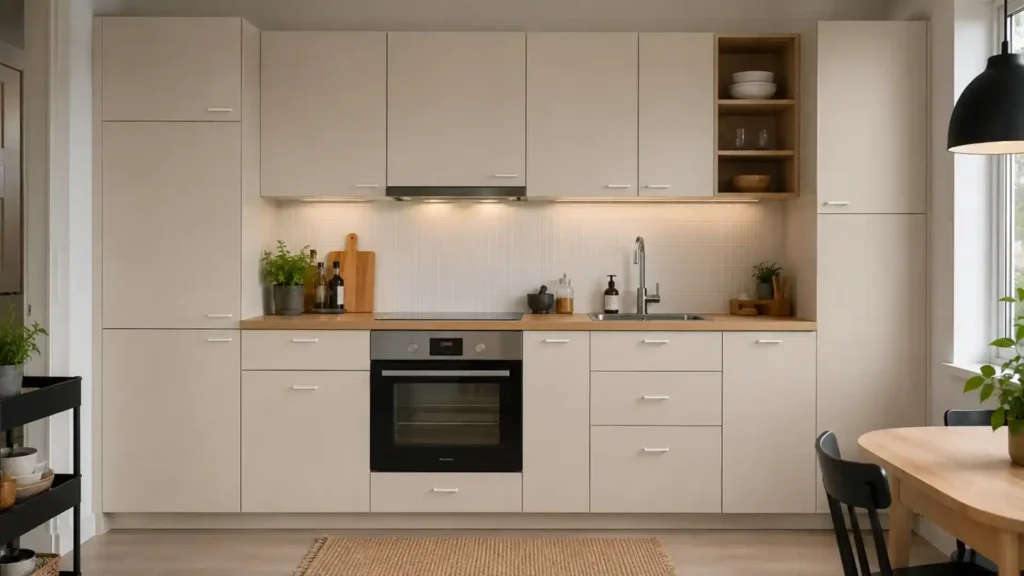
Cabinets usually account for 40%–50% of the total IKEA kitchen budget.
Cabinet Doors and Fronts
Cabinet doors and fronts define the visible design of the kitchen. They come in various colors, textures, and finishes such as matte, glossy, or wood-effect styles. These elements allow customization of appearance while keeping the same internal cabinet structure.
The final cost depends heavily on material choice such as matte foil, wood veneer, or high-gloss finishes.
Countertops
An IKEA kitchen setup may also include countertops, depending on the region and product selection. These are typically available in materials like laminate, wood, and in some cases quartz-like options. They are designed to match IKEA cabinet dimensions for easy installation.
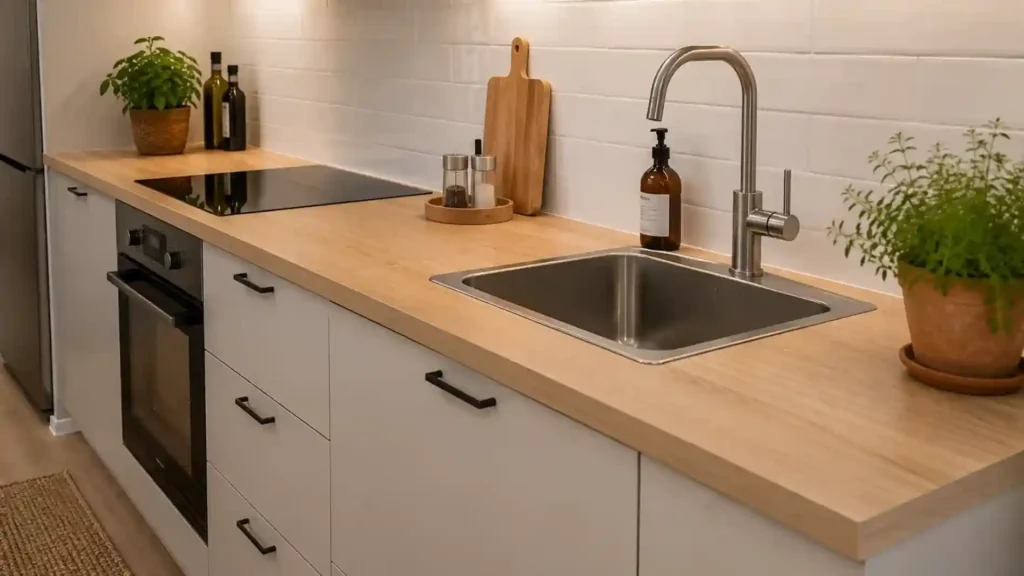
Countertops usually represent 15%–25% of total kitchen cost.
Kitchen Appliances
Some setups also include kitchen appliances. These may consist of ovens, cooktops, microwaves, dishwashers, and refrigerators. In many cases, these appliances are designed to integrate seamlessly with IKEA cabinet systems.
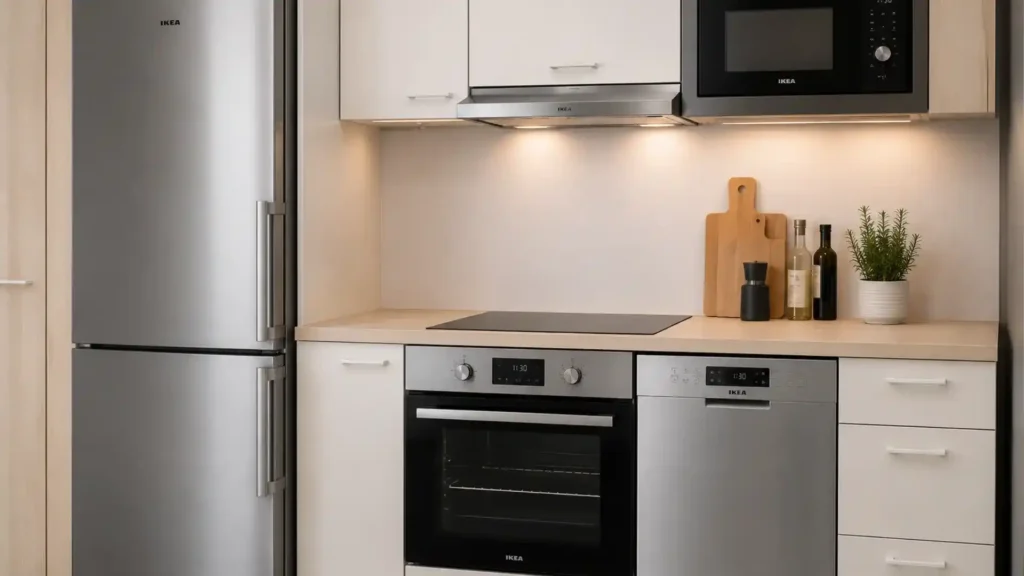
Appliances can significantly increase the total project cost depending on energy rating and brand selection.
Interior Fittings and Storage Accessories
Inside the cabinets, IKEA provides a wide range of storage solutions. These include drawer dividers, pull-out trays, shelf organizers, and waste sorting systems. These additions are optional but help improve organization and usability.
Sinks and Faucets
Sinks and faucets are also part of IKEA’s kitchen range. They are generally simple, functional designs made to coordinate with IKEA cabinets and countertops.
In addition to these main elements, homeowners often add smaller functional upgrades such as lighting systems, pull-out organizers, and interior storage accessories to improve usability and space efficiency.
In simple terms, an IKEA kitchen setup includes everything required to build a fully functional kitchen space, but because each element is selected individually, the final configuration and cost can vary significantly from one project to another.
Important Cost Insight
While IKEA kitchens appear affordable at the product level, the total cost increases when installation and remodeling work are included. Industry data shows that a full IKEA kitchen project typically lands between:
- $6,000 – $25,000 (products + basic installation)
- $15,000 – $40,000+ (full remodel with labor and upgrades)
The biggest cost drivers are cabinet quantity, countertop material, and professional installation, not the base IKEA system itself.
Key Factors That Affect IKEA Kitchen Cost
The total cost of an IKEA kitchen remodel from IKEA is not determined by a single price point but by a combination of design choices, installation decisions, and site conditions. Because the system is modular, even small changes in planning can significantly shift the final budget.
Kitchen Size and Layout Complexity
Kitchen size is one of the most direct cost drivers. A small straight-line or L-shaped kitchen requires fewer cabinets, fewer fittings, and simpler installation work. In contrast, larger layouts such as U-shaped kitchens or designs with islands require more materials and labor, which increases the total cost.
More complex layouts also require additional planning and sometimes custom adjustments, which further increases installation time and expense.
Material and Finish Selection
Material choices have a major impact on pricing. Basic cabinet fronts and laminate countertops are the most affordable options, making them suitable for budget-friendly setups. However, premium finishes, textured surfaces, and natural stone countertops can significantly raise the overall cost even when the layout remains unchanged.
Since cabinet fronts and countertops define most of the visible kitchen, this category often determines the overall design budget.
Appliance Selection
Appliances are another major cost factor. A basic setup with freestanding or entry-level appliances keeps the budget relatively low. However, fully integrated appliances such as built-in ovens, dishwashers, and refrigerators can significantly increase the total investment.
Higher-end appliances also require more precise installation, which can add to labor costs.
Installation Method and Labor Costs
Installation choice plays a critical role in the final budget. DIY installation can reduce costs substantially, especially for simpler layouts. On the other hand, professional installation includes assembly, fitting, plumbing, and electrical work, which increases the overall expense.
Complex kitchen designs often require skilled installers, which further raises labor costs due to additional time and technical requirements.
Geographic Location and Labor Rates
Location also affects pricing. Labor costs vary significantly depending on the region, contractor availability, and local market rates. In some areas, experienced IKEA installers may charge higher fees due to demand or limited availability.
Transportation and delivery costs can also vary based on location, adding another layer to the total budget.
Customization and Design Changes
Customization level is another important factor. Standard IKEA configurations are the most cost-efficient because they use pre-designed modules without modification. However, custom cuts, non-standard fittings, or structural adjustments increase material waste and labor time.
Even small design changes can affect compatibility within IKEA’s modular system, which may lead to additional installation complexity and cost.
DIY vs Professional Installation Cost Difference
One of the biggest decisions in an IKEA kitchen remodel from IKEA is whether to install it yourself or hire professionals. This choice has a direct and often significant impact on the total project cost, timeline, and overall finish quality.
DIY Installation
Choosing a DIY approach can reduce costs substantially because you eliminate most labor expenses. In many cases, homeowners only pay for the kitchen components themselves, along with basic tools and minor assistance where needed.
A DIY installation typically works best for:
- Smaller or simple kitchen layouts
- Homeowners with basic carpentry skills
- Projects with flexible timelines
While it is the most cost-saving option, it also comes with challenges such as time investment, measurement accuracy, and the risk of installation errors that may lead to additional expenses later.
Professional Installation
Professional installation involves hiring contractors or IKEA-certified installers to handle the entire setup, including cabinet fitting, leveling, plumbing coordination, and appliance integration. This significantly increases the total cost but ensures a more precise and efficient installation.
Typical professional installation costs can range from $2,000 to $10,000+, depending on kitchen size, layout complexity, and regional labor rates.
This option is preferred for:
- Complex kitchen layouts
- Full remodels involving plumbing or electrical work
- Homeowners who want a faster, hassle-free process
Key Cost Difference in Simple Terms
The core difference between DIY and professional installation is not just money but trade-off:
- DIY reduces cost but increases time and responsibility
- Professional installation increases cost but reduces risk and effort
In many real-world IKEA kitchen projects, this decision alone can shift the total budget by several thousand dollars, making it one of the most important factors in overall planning.